Sie haben sich erfolgreich abgemeldet.

Hallo !
Logout

Peripherer IV-Katheter (PIVC)

Der erste Schritt zu einer sicheren und effizienten Infusionstherapie

Es ist der periphere IV-Katheter (PIVC), der Therapien in erster Linie zugänglich macht. Diese Schlüsselfunktion ist der Grund, warum wir uns seit 1962 dafür einsetzen, neue Maßstäbe im Patientenzugang zu setzen.

Health Care Professional Check

Der Inhalt dieser Webseite ist nur für Personen vorgesehen, die im Gesundheitswesen tätig sind (Health Care Professionals = HCP). Mit Klick auf „Bestätigen“ erklären Sie, dass Sie eine Fachperson im Gesundheitswesen sind. Ist dies nicht der Fall, klicken Sie auf "Ablehnen" und besuchen Sie unsere öffentlich zugänglichen Seiten.

Bestätigen Ja, ich bin ein Healthcare-Professional. Abbruch Nein, ich bin kein Healthcare-Professional.
  • Rund

    35- 0%

    durchschnittliche Ausfallrate von peripheren IV-Kathetern[2]

  • Mehr als

    0%

    Blutleckagen beim Einführen des Katheters[3]

Portfolio für periphere IV-Katheter

Introcan Safety® 3

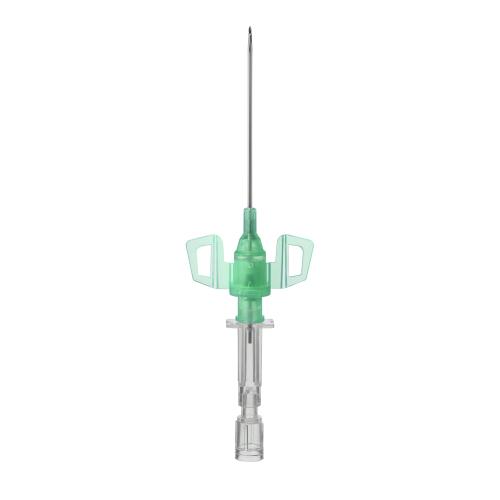
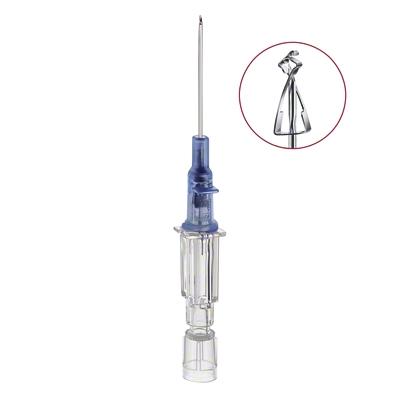
Introcan Safety® 3 is a peripheral IV catheter with a passive fully automatic needlestick protection and multi-access blood control septum that helps to protect clinicians and patients from blood exposure. It is a single-use device to generate intravascular and tissue access to sample blood, monitor blood pressure, or administer fluids and blood intravascularly. Introcan Safety® 3 is also indicated for subcutaneous infusion therapies and 325 psi power injector applications (14G – 24G).

Introcan Safety®

Introcan Safety® is a peripheral IV catheter with a passive fully automatic needlestick protection. It is a single-use device to generate intravascular and tissue access to sample blood, monitor blood pressure, or administer fluids and blood intravascularly. Introcan Safety® is also indicated for subcutaneous infusion therapies and 300 PSI power injector applications (18-24G).The device can be used for all patients for which infusion therapy is prescribed. No gender or age related limitations. Introcan Safety® can be used for adults, pediatrics and neonates.

Introcan Safety® W

Introcan Safety®-W is a peripheral IV catheter with a passive fully automatic needlestick protection. It is a single-use device to generate intravascular and tissue access to sample blood, monitor blood pressure, or administer fluids and blood intravascularly. Introcan Safety®-W is also indicated for subcutaneous infusion therapies and 300 PSI power injector applications (18G - 24G).The device can be used for all patients for which infusion therapy is prescribed. No gender or age related limitations. Introcan Safety®-W can be used for adults, pediatrics and neonates.

Introcan Safety® Deep Access

Introcan Safety® Deep Access is a peripheral IV catheter with a passive fully automatic needlestick protection. It is designed for difficult intravenous access (DIVA) patients and allows access to deeper veins thanks to its longer catheter(G18-22 x 64mm / 21/2 in; G24 x 32mm / 11/4 in). DIVA patients can be clustered as the following:Pediatric / Neonate patientsOverweight or obese patientsOverage or chronically ill (i.e. diabetes) patientsEmergency / Acute (i.e. skin burn, haematoma, dehydration) patientsIt is a single-use device to generate intravascular and tissue access to sample blood, monitor blood pressure, or administer fluids and blood intravascularly. Introcan Safety® Deep Access is also indicated for subcutaneous infusion therapies and 300 PSI power injector applications.

Vasofix® Safety

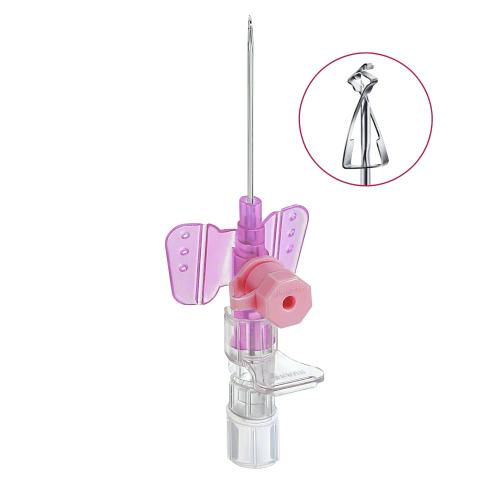
Vasofix® Safety is a peripheral IV catheter with an injection port and a passive fully automatic needlestick protection. The single-use device is intended to generate intravascular access to sample blood, administer fluids/medication and blood/blood products intravenously.The device can be used for all patients for which infusion therapy is prescribed. No gender or age related limitations. Vasofix® Safety can be used for adults, pediatrics and neonates.

[1] Zingg W. Pittet D. Periphere Venenkatheter: ein unterschätztes Problem. Int J Antimikrobielle Wirkstoffe. 2009; 34 (Zusatz 4):38-42.

[2] Helm RE, Klausner JD, Klemperer JD, Flint LM, Huang E. Akzeptiert aber inakzeptabel: Ausfall des peripheren IV-Katheters. J Infus Nurs. 2015; 38(3): 189-203.

[3] Jagger J. Perry J. Parker G. Phillips EK. Ergebnisse der Umfrage Pflege 2011: Blutexpositionsrisiko während peripherer intravenöser Einführen und Entfernen des Katheters. Pflegedienste 2011;41(12): 45-49.