Vous vous êtes déconnecté avec succès.

Bonjour !
Déconnexion

Cathéter IV périphérique (PIVC)

La première étape vers une thérapie par perfusion sûre et efficace

C’est le cathéter IV périphérique (PIVC) qui rend les thérapies accessibles en premier lieu. Cette fonction clé est la raison pour laquelle nous nous engageons à établir de nouvelles références en matière d’accès des patients depuis 1962.

Health Care Professional Check

Le contenu de ce site web est uniquement destiné aux personnes travaillant dans le secteur de la santé (Health Care Professionals = HCP). En cliquant sur « Confirmer », vous déclarez que vous êtes un professionnel de la santé. Si ce n'est pas le cas, cliquez sur « Refuser » et visitez nos pages accessibles au public.

Oui Oui, je suis un professionnel de la santé. Non Non, je ne suis pas un professionnel de la santé.
  • environ

    35- 0%

    Taux moyen d’échec des cathéters IV périphériques2 

  • plus de

    0%

    Fuites de sang survenant pendant l’insertion du cathéter3

Portefeuille de cathéters veineux périphérique

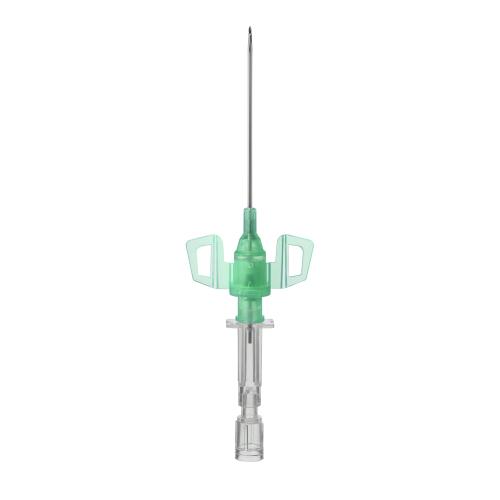
Introcan Safety® 3

Introcan Safety® 3 is a peripheral IV catheter with a passive fully automatic needlestick protection and multi-access blood control septum that helps to protect clinicians and patients from blood exposure. It is a single-use device to generate intravascular and tissue access to sample blood, monitor blood pressure, or administer fluids and blood intravascularly. Introcan Safety® 3 is also indicated for subcutaneous infusion therapies and 325 psi power injector applications (14G – 24G).

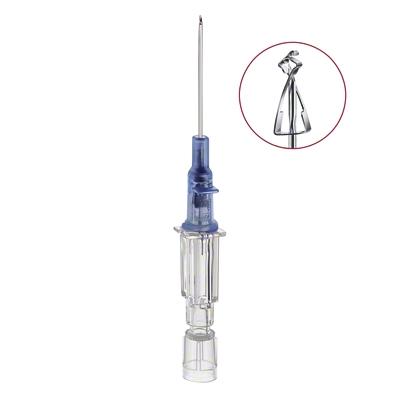
Introcan Safety®

Introcan Safety® is a peripheral IV catheter with a passive fully automatic needlestick protection. It is a single-use device to generate intravascular and tissue access to sample blood, monitor blood pressure, or administer fluids and blood intravascularly. Introcan Safety® is also indicated for subcutaneous infusion therapies and 300 PSI power injector applications (18-24G).The device can be used for all patients for which infusion therapy is prescribed. No gender or age related limitations. Introcan Safety® can be used for adults, pediatrics and neonates.

Introcan Safety® W

Introcan Safety®-W is a peripheral IV catheter with a passive fully automatic needlestick protection. It is a single-use device to generate intravascular and tissue access to sample blood, monitor blood pressure, or administer fluids and blood intravascularly. Introcan Safety®-W is also indicated for subcutaneous infusion therapies and 300 PSI power injector applications (18G - 24G).The device can be used for all patients for which infusion therapy is prescribed. No gender or age related limitations. Introcan Safety®-W can be used for adults, pediatrics and neonates.

Introcan Safety® Deep Access

Introcan Safety® Deep Access is a peripheral IV catheter with a passive fully automatic needlestick protection. It is designed for difficult intravenous access (DIVA) patients and allows access to deeper veins thanks to its longer catheter(G18-22 x 64mm / 21/2 in; G24 x 32mm / 11/4 in). DIVA patients can be clustered as the following:Pediatric / Neonate patientsOverweight or obese patientsOverage or chronically ill (i.e. diabetes) patientsEmergency / Acute (i.e. skin burn, haematoma, dehydration) patientsIt is a single-use device to generate intravascular and tissue access to sample blood, monitor blood pressure, or administer fluids and blood intravascularly. Introcan Safety® Deep Access is also indicated for subcutaneous infusion therapies and 300 PSI power injector applications.

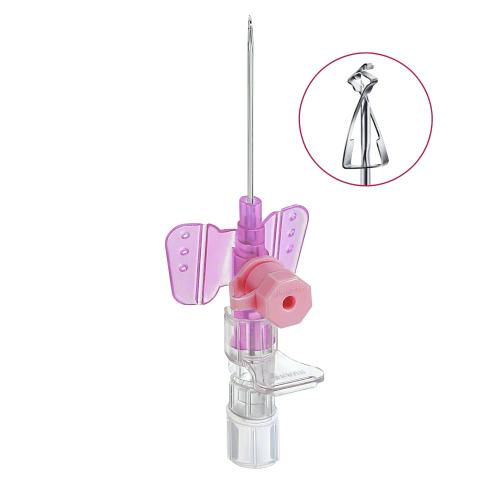
Vasofix® Safety

Vasofix® Safety is a peripheral IV catheter with an injection port and a passive fully automatic needlestick protection. The single-use device is intended to generate intravascular access to sample blood, administer fluids/medication and blood/blood products intravenously.The device can be used for all patients for which infusion therapy is prescribed. No gender or age related limitations. Vasofix® Safety can be used for adults, pediatrics and neonates.

[1] Zingg W. Pittet D. Cathéters veineux périphériques : un problème sous-évalué. Agents antimicrobiens Int J. 2009 ; 34 (suppl. 4) :38-42.

[2] Helm RE, Klausner JD, Klemperer JD, Flint LM, Huang E. Accepté mais inacceptable : défaillance du cathéter IV périphérique. J Infus Nurs. 2015 ; 38(3) : 189-203.

[3] Jagger J. Perry J. Parker G. Phillips Championnat d’Europe Résultats de l’enquête Nursing 2011 : Risque d’exposition au sang pendant une perfusion intraveineuse périphérique l’insertion et le retrait du cathéter. Soins infirmiers 2011;41(12) : 45-49.