Es gibt keine Website-Inhalte zu Ihrer Suchanfrage.
Website-Inhalte

Sie haben sich erfolgreich abgemeldet.


Noch nicht registriert?
Die Herausforderung bei chronischen Wunden
In entwickelten Ländern wird geschätzt, dass 1 bis 2 % der Bevölkerung im Laufe ihres Lebensan einer chronischen Wunde erkranken.1 Wundinfektionen gehören zu den häufigsten Komplikationen bei nicht heilenden Wunden2 und stellen eine Herausforderung für Patienten, medizinische Fachkräfte und Einrichtungen dar.

Der Inhalt dieser Webseite ist nur für Personen vorgesehen, die im Gesundheitswesen tätig sind (Health Care Professionals = HCP). Mit Klick auf „Bestätigen“ erklären Sie, dass Sie eine Fachperson im Gesundheitswesen sind. Ist dies nicht der Fall, klicken Sie auf "Ablehnen" und besuchen Sie unsere öffentlich zugänglichen Seiten.
Bestätigen Ja, ich bin ein Healthcare-Professional. Abbruch Nein, ich bin kein Healthcare-Professional.Sie können den Heilungsprozess beeinträchtigen und sich erheblich negativ auf die gesundheitsbezogene Lebensqualität auswirken.3 Patienten mit einer infizierten Wunde erleben typischerweise Beschwerden mit Symptomen wie Schmerzen, unangenehmen Gerüchen, eitrigem Exsudat, eingeschränkter Mobilität usw.4 Herausforderungen, die sowohl Patienten als auch ihre Familien tiefgreifend betreffen können.5
Das Management infizierter Wunden erfordert ein multidisziplinäres Team und einen ganzheitlichen Ansatz, der eine umfassende Wundbeurteilung und eine allgemeine Patientenversorgung umfasst.6 Daher ist es entscheidend, die effektivsten Strategien zur Prävention, Diagnose und Behandlung zu identifizieren.
0 bis 2 %
der Bevölkerung erleidet im Laufe ihres Lebens eine chronische Wunde.7
Mehr als
0%
der chronischen Wunden werden als infiziert eingeschätzt.8
Das Wundinfektionskontinuum betrachtet die verschiedenen Stadien der Wundinfektion, die von der ersten Kontamination bis zur offenen Sepsis reichen. 9,10 Dieses vom International Wound Infection Institute (IWII) bereitgestellte Konzept soll medizinisches Fachpersonal bei der Identifizierung der richtigen Strategien zur Prävention und Behandlung infizierter Wunden unterstützen.

*Die Verwendung von Prontosan und Askina ersetzt nicht die Notwendigkeit einer systemischen oder anderen spezifischen Infektionsbehandlung. Übernommen vom International Wound Infection Institute (IWII) Therapeutic wound and skin cleansing: Klinische Evidenz und Empfehlungen Wunden International. 2025.
Klicken Sie hier, um die vollständige Grafik als Referenz herunterzuladen.
Jetzt downloadenEin moderner kombinierter Ansatz
Unser Therapiekonzept deckt alle Stadien des Wundinfektionskontinuums mit unseren empfohlenen Lösungen ab. Prontosan® Wundspüllösung zur therapeutischen Wundreinigung zur Verhinderung der Bildung von Biofilmen von den anfänglichen bis zu den letzten Stadien des Kontinuums. Prontosan® Wundgel und Wound Gel X unterstützen die Infektionsprävention, indem sie eine antimikrobielle Barriere bilden.
Für die Behandlungsphase reduziert unser Askina® Calgitrol®-Sortiment an silbernen Wundverbänden, das zur Behandlung infizierter Wunden entwickelt wurde, die klinischen Anzeichen einer Infektion11 und bietet gleichzeitig eine breite antimikrobielle Wirksamkeit.12 Die Evidenz zeigt, dass die Verwendung eines Biofilmentferners/-reinigers in Kombination mit einem antimikrobiellen Mittel effektiver bei der Behandlung von Infektionen ist als die Verwendung eines antimikrobiellen Mittels allein.13
Unser Ziel ist es, Ärzte mit effektiven, gut verträglichen Optionen zu unterstützen, die das Infektionsrisiko und die antimikrobielle Resistenz senken und das ideale Umfeld für die Wundheilung schaffen – was zu besseren Ergebnissen und einer effizienteren Versorgung führt.
Prontosan® reduziert die Infektionsraten im Laufe der Zeit deutlich 14-16 und übertrifft Kochsalzlösung17 mit einer antimikrobiellen Barriere, die durch Prontosan Wound Gel und Prontosan Wound Gel X gebildet wird. 18,19
Die Lösung zur Reinigung, Debridement und zum Schutz vor Infektionen.
Mehr erfahren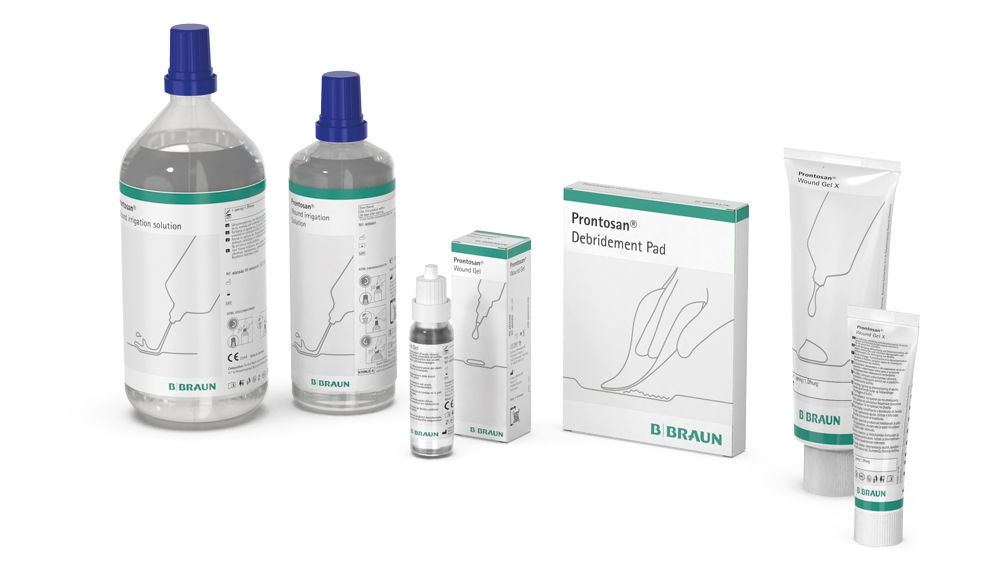
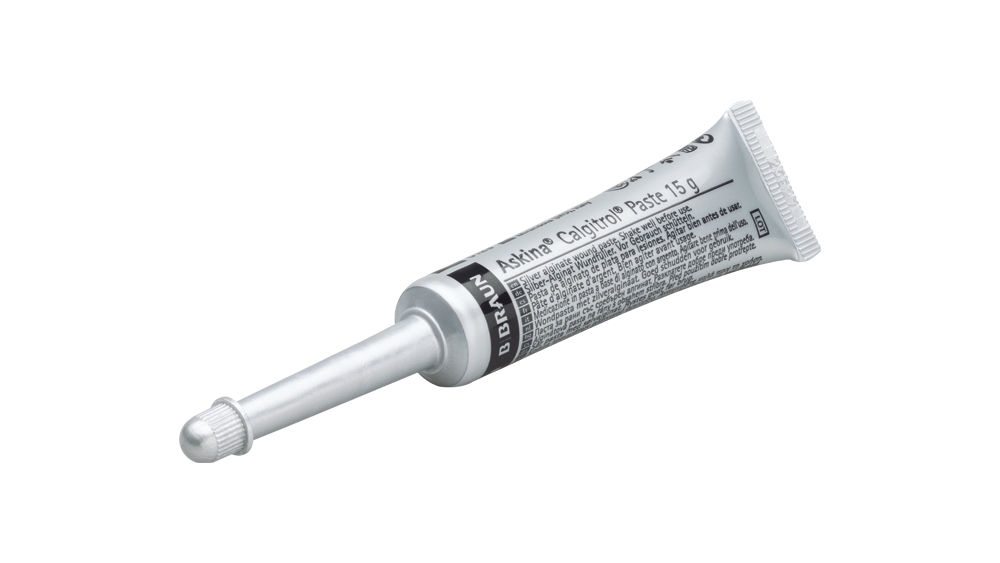
Askina® Calgitrol® Paste zeigt eine Reduzierung der klinischen Anzeichen einer Infektion innerhalb der ersten Behandlungswoche.20 und bietet gleichzeitig eine breite antimikrobielle Wirksamkeit.21
Mehr erfahrenAlternative zu Antibiotika bei infizierten Wunden
Eine effektive Wundversorgung beginnt mit den richtigen Entscheidungen zur richtigen Zeit.
Der frühzeitige Einsatz von Antibiotika im Wundmanagement kann kurzfristige Vorteile bringen, aber ein Überverbrauch beschleunigt die antimikrobielle Resistenz – eine globale Gesundheitskrise, die die Behandlung chronischer Wunden immer schwieriger macht.22 Ohne effektive Intervention könnte AMR bis 2050 für 8,2 Millionen Todesfälle weltweit verantwortlich sein 23,24, mit wirtschaftlichen Auswirkungen von bis zu $1 Billionen25.
Bei B. Braun unterstützen wir aktiv den Kampf gegen AMR. Durch die Partnerschaft mit der EWMA und das Sponsoring des EWMA Antimicrobial Stewardship Programme, das den umsichtigen und angemessenen Einsatz von Antibiotika im Wundmanagement betont, verpflichten wir uns, Best Practices zu fördern, die die Wirksamkeit der Behandlung erhalten und die Patienten schützen. Gemeinsam können wir mit unseren fortschrittlichen Lösungen, die eine frühzeitige Intervention und verantwortungsvolle antimikrobielle Praktiken fördern, einen bedeutsamen Einfluss auf die Wundversorgung haben.

Alle offenen Wunden werden kontaminiert und mit Mikroorganismen besiedelt, jedoch werden nicht alle kontaminierten Wunden infiziert. Die symbiotische Beziehung zwischen dem Wirt und dem kolonisierenden Mikroorganismus wird pathogen, wenn das Immunsystem des Wirts durch die Virulenz der in einer Wunde vorhandenen Organismen beeinträchtigt wird und eine Wundinfektion auftritt. Biofilme tragen auch zu einer verzögerten Wundheilung bei und erhöhen das Risiko einer Wundinfektion.26
Das Risiko einer Wundinfektion wird durch die Eigenschaften des Individuums (Gastgebers), seiner Wunde und der Umgebung beeinflusst. Wirtsfaktoren, die die Entwicklung einer Wundinfektion beeinflussen, sind systemisch, multifaktoriell und umfassen viele Variablen. Die Art der Wunde (d. h. Ätiologie) trägt ebenfalls zum Infektionsrisiko bei.26
Lokale Infektion wird verwendet, um sich auf ein Infektionsstadium zu beziehen, in dem Mikroorganismen in der Wunde vorhanden sind und sich vermehren, die eine Reaktion des Wirts hervorrufen, oft mit einer Verzögerung der Wundheilung. Lokale Infektion ist innerhalb der Wunde und der unmittelbaren Wundumgebung (weniger als 2 cm) enthalten. Lokale Infektionen zeigen sich oft als verdeckte (subtile) Anzeichen und Symptome, die möglicherweise nicht sofort als Anzeichen einer Infektion erkannt werden.
Verdeckte (subtile) Anzeichen und Symptome einer Wundinfektion sind: Hypergranulation, Blutung, brüchige Granulation, Epithelüberbrückung und Taschenbildung im Granulationsgewebe, zunehmendes Exsudat, verzögerte Wundheilung über die Erwartungen hinaus. Mit fortschreitender lokaler Wundinfektion werden klassische (offene) Kardinalanzeichen und Symptome, die traditionell mit lokalen Infektionen assoziiert sind, im Allgemeinen offensichtlich: Erythem, lokale Wärme, Schwellung, eitriger Ausfluss, Wunddehiszenz und -vergrößerung, Schmerzen und zunehmender Geruch.26
Bis zu 90 % der chronischen Wunden enthalten Biofilm, der eine Rolle bei der Wundinfektion spielt. Es gibt ein sich entwickelndes Verständnis und eine zunehmende Akzeptanz des Zusammenhangs zwischen Biofilmen, verzögerter Wundheilung, Wundinfektionsrisiko und erhöhter Antibiotikaresistenz.26
Die Prävention von Wundinfektionen konzentriert sich auf die Implementierung von Strategien zur Reduzierung der individuellen Risikofaktoren des Patienten. Festlegung klinischer Ziele, Zusammenarbeit mit dem Patienten und seiner Familie sowie ganzheitliche Beurteilung und Behandlung zur Reduzierung des Wundinfektionsrisikos. Neben einem individuellen Ansatz zur Behandlung klinischer und umweltbedingter Risikofaktoren für Wundinfektionen können topische Antimikrobielle Mittel eine Rolle bei der Prävention von Wundinfektionen bei Wunden mit sehr hohem Risiko spielen.26
Die Wundreinigung ist ein grundlegender Bestandteil der Wundbettvorbereitung. Unter Wundreinigung versteht man die aktive Entfernung von Oberflächenkontaminanten, losen Rückständen, nicht anhaftendem, nicht lebensfähigem Gewebe, Mikroorganismen und/oder Rückständen früherer Verbände von der Wundoberfläche und der wundumgebenden Haut. Eine therapeutische Reinigung mit tensidischen oder antimikrobiellen Reinigern kann bei der Entfernung von hartnäckigem devitalisiertem Gewebe oder vermutetem Biofilm in chronischen Wunden von zusätzlichem Nutzen sein.26
Bitte überprüfen Sie Ihren Posteingang und bestätigen Sie die E-Mail, die wir Ihnen gesendet haben.

